
For the inaugural post, I’d like to dedicate the month of June to books that had a profound effect on me and the way I see the world. I could make this case to varying degrees about any book I’ve read. But what follows are standouts among my “completed pile”…
*book titles contain links with information about the author and/or that specific book.
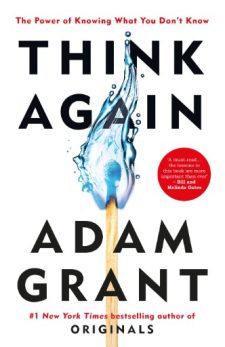
The first is Think Again: The Power of Knowing What You Don’t Know, by Adam Grant. He is a psychologist and professor at the Wharton School of the University of Pennsylvania, known for his expertise in creativity, original thought processes, empathy, and communication. I first heard of this book on an episode of Hidden Brain, a podcast hosted by Shankar Vedantam. Adam was a featured guest, there to discuss themes of political polarization and the failed state of discourse in society. I was enthralled by his interview and his practical advice on engaging people with divergent views. In fact, it was his recounting of the role of reading in the Finnish educational system that initially inspired me to start this blog.
The book is entertaining and articulates the importance of thinking and re-thinking. The writing is informed, relatable, and chock-full of strategies for employing a flexible mindset in daily life.
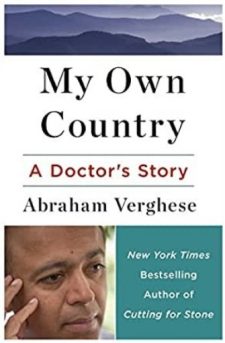
The second book is My Own Country: A Doctor’s Story, by Abraham Verghese. I was first introduced to this book by a dear friend and colleague of mine, who recently passed away from pancreatic cancer. Although we knew each other around the campus where we worked, we both agreed that our connection solidified over the shared experience of reading this memoir while members of an extracurricular book club. We often talked about the book and how it sparked our subsequent friendship. We became family over the next several years.
Obviously, my attachment is as much about my friend as it is the text. But hey, that’s the magic of books. Verghese is a medical doctor and author known for his storytelling in fiction and nonfiction formats. My Own Country is an account of his own experiences of living and practicing in a rural Tennessee town at the dawn of the AIDS epidemic in the United States.
He provides a detailed account of how the disease ravaged the lives of people of different backgrounds, breaking down the stereotypes associated with homosexual males and the contracting of the virus. The book is unnerving and comforting at the same time. It’s a heavy read, but full of profound insights into the human condition.
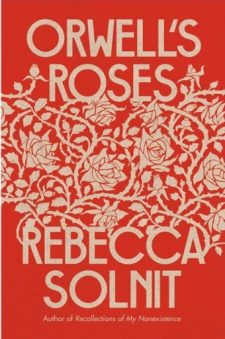
The third book is Orwell’s Roses, by Rebecca Solnit. As a point of interest, I am obsessed with the writing of George Orwell. I was fascinated by the brutal regimes at work in Nineteen Eighty-Four and Animal Farm. Orwell had a keen ability to visualize corruption, fear, and other devices of control in totalitarian states.
Solnit’s book is a deep dive into the life experience that shaped his most famous novels through the lens of Orwell’s love for gardening, nature, and the mundanity of daily life. Woven through the book are events and encounters that shaped his personal convictions: his rejection of imperialism, his disdain for fascism, and his compassion for the poor, which sprang from his own impoverished existence as a young man.
It also includes commentary on the rose industry, global warming, and other adjacent topics, which the author winds back to his life in interesting and unexpected ways. It’s regarded as a non-biography of Orwell’s life. So, whether you’re a fan of Orwell or know nothing about him, this is a fascinating read.
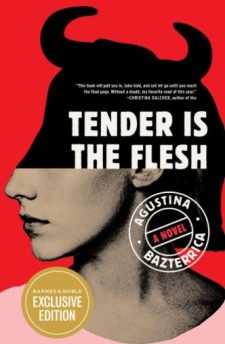
The fourth book is Tender is the Flesh, by Augustina Bazterrica. Full disclosure, I love to read anything dystopian, horrific, unnerving, unsettling, dark, and/or foreboding. My friends, I’ve read a lot of scary stories, but this one of the most disturbing. And although I read a lot of scary stories, none have affected me the way this one did.
The time is in the not-too-distant future in a South American country where almost all of the animals have been killed by a mysterious virus. In response, the government began to cultivate a new food source: humans. The novel examines the human relationship with animals as well as the moral dilemmas that plague the meat production industry. The book is expertly researched, and Bazterrica describes in horrifying detail how humans are bred, sold, slaughtered, and processed in ways that are parallel to those of industrial meat-packing plants.
Bazterrica is not a vegetarian but consumes a diet containing little meat. She also promotes the ethical treatment of animals. But even “humane” practices are circumspect if you consider her descriptions of packaging meat for sale on the mass market. The story has a sub-plot that centers around a man who is prominent in the “industry,” but is clearly conflicted about the practice of consuming human beings as a food source. His trials and tribulations throughout the book illustrate the societal fallout – specifically the lasting impacts of dehumanization on various populations.
I still eat meat, but every time I do, this book is in the back of my mind. This book is not for everyone. I didn’t read it in public because the premise was so horrifying, I didn’t want to have to explain it to anybody. But it made me think deeply about my own humanity and how I honor it in people, animals, and the environment.
Mental well-being alert: This book contains accounts of animal cruelty as well as situations in which humans are physically, mentally, and sexually abused. If you are at all triggered by the prospect of any of these situations, please do not read this book.
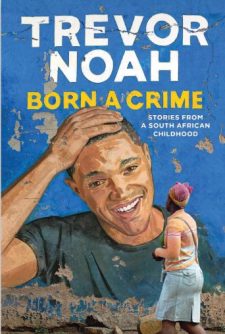
The fifth and final book is Born a Crime: Stories From a South African Childhood, by Trevor Noah. I enjoyed watching Trevor so much on The Daily Show, I couldn’t wait to read his book. Bitingly funny and harrowing at times, this is a fascinating window into the circumstances that shaped the person he is today. While reading about his life was enthralling, it was the cultural commentary about South Africa that I found enlightening.
He succinctly describes the sheer brutality of Apartheid and its effects on his well-being. Born to a black mother and a white father, his very existence was a crime. He lived between two worlds, which was often a source of great strife in his personal life. In explaining the illegality of his own birth, he also provides detailed historical context for societal friction – details that will make you realize how sheltered we are in the United States.
For instance, Trevor has an entire vignette about how people are named “Adolf,” “Hitler,” and “Mussolini.” While that might sound absurd to somebody in the United States, he points out that there are plenty of European kings of old who brutally slaughtered Africans in the name of empire. The numbers are likely astronomical, but we have no way of knowing, as nobody cared enough to document the destruction of life. As a result, these names are more infamous in African societies. The book is laugh-out-loud funny, but also has a sense of foreboding as the negative impact of discriminatory laws persist today, all around the world.
There you have it. Five books that are near and dear to my heart for different reasons. If you’ve already read these, maybe you’ll feel inclined to read them again – or even better, share with a friend. Something to contemplate: what books have changed you?




 More Reading
Leave a comment