
I’ll be honest, it’s difficult for me to embrace patriotism for the two-hundred and fiftieth birthday of these United States. When I contemplate the enormity of the earth and the diverse types of people that inhabit all of the different countries, I consider myself sheltered in many ways. That said, I do possess enough understanding to know that I’m damn lucky to be born on this soil, at a certain time in history. Or at least, that’s always been my stance, even when my country doesn’t love its people back.
These days, I reflect on how far we’ve come, but also how far we’ve regressed under the pseudo-authoritarian rule of the current administration. Roe v. Wade was rolled back from being the “law of the land,” people are being detained and deported without explanation, civil rights protection for the disabled is being demolished – the list goes on and on and on. Before the current political schism, we were already imperfect. For me, the fourth was not necessarily a celebration of “independence,” but a recommitment to working towards our highest ideals. The anniversary was yet another acknowledgement that we must rectify the atrocities of slavery, discrimination, and government-sanctioned inequality.
But in the last year and a half, we’ve devolved beyond my already low expectations – so much so that I fear the generational damage will be tremendous. As a result, I’m dedicating the month of July to reflect on our perception of “freedom” and its implications for different people, then and now. The books on offer this month center those perspectives, acknowledge the struggles of the past, and highlight repercussions that remain persistent in the present day.
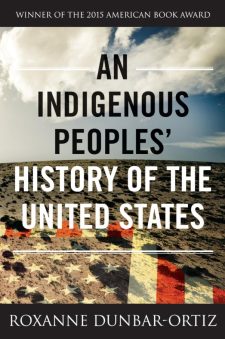
“An Indigenous Peoples’ History of the United States,” by Roxanne Dunbar-Ortiz
Admittedly, it’s been a while since I’ve picked this book up. But it’s one of my all-time favorite reads and encapsulates the racial tension surrounding the origins of the United States. Ortiz was raised in Oklahoma and is of Cherokee descent. She is also a feminist and social justice activist. This is an informative counter to the Eurocentric perspectives that dominate history classes from the K-12 to college levels.
The book expands on the horrors of colonialism from the perspective of indigenous people who inhabited the land that eventually became the United States of America. Dunbar-Ortiz speaks in detail about this vast network of advanced civilizations and how facets of their culture have been bastardized and appropriated over time by colonial powers – facts that were revelations to me at the time. If you are interested in expanding your understanding of the origin of our nation, then this book is an essential read.
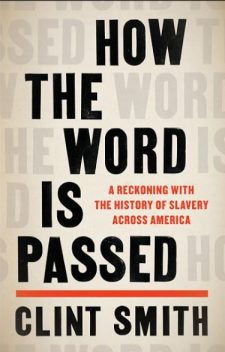
“How the Word Is Passed: A Reckoning with the History of Slavery Across America,” by Clint Smith
I first heard about this book through a faculty development session at my university. I hadn’t heard much about the details of the text, but it was released around the anniversary of the Tulsa Race Massacre. We were all reading a lot about the atrocities of slavery and contemplating how those laws and behaviors continue to reverberate through time.
Clint Smith is an incredible storyteller. In the book, he visits specific locations with deep connections to the enslavement of people. Plantations are an obvious area of focus, but there are some unexpected places with little-known cultural ties to the slave trade that would be revelatory to people born outside of the Black culture. Throughout the book, he uses the context of these places to challenge perspectives on slavery and the conflicting feelings that surround its role in the founding of the United States.
Smith is a thoughtful, curious writer, and those qualities are evident in his narrative. Through interviews, research, and his own observations, he compels us to reckon with the different ways in which past slavery is portrayed, acknowledged, and its presence in modern society.
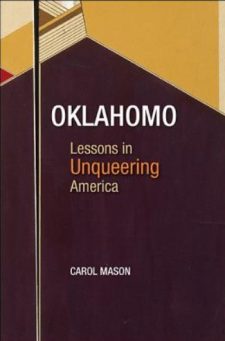
“Oklahomo: Lessons in Unqueering America,” by Carol Mason
“Oklahomo” is another book that holds deep personal significance for me. I was introduced to it by my dear friend and colleague, who recently passed away from pancreatic cancer. I referenced our connection in the first post on this blog site. While our friendship deepened as a result of reading Verghese’s book about the AIDS crisis, you could say that Carol Mason’s book is where our friendship truly began.
For those unaware, Oklahoma has a very tumultuous origin story. It is a convergence of cultures. It is also a convergence of people – those who were willing to come here for different reasons, those who were forced here from their ancestral homelands, and wild-eyed land thieves, eager to stake a claim to some of the only unassigned land that remained throughout the country. This book uses that history to explore the resulting conservative political ideologies and ways in which they were adopted and weaponized by anti-gay figures at the national level.
The book profiles four people – two who are known for their rabid, anti-queer sentiments, and two people in academia who lost their jobs because of their queer identities. This book was transformative for me in many ways. My family’s roots in Oklahoma are at least four generations deep, and yet there is so much to learn about my home state. But whether you’re from Oklahoma or not, it is a fascinating account of how these beliefs and ways of being affect the national consciousness as we anticipate rollbacks of LGBTQ+ rights at the hands of the current administration and republican majorities in Congress.
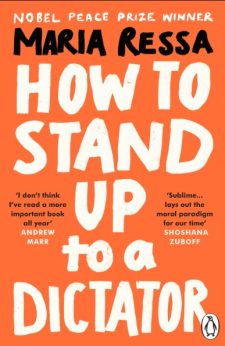
“How to Stand Up to a Dictator: The Fight for Our Future,” by Maria Ressa
This book, by Nobel Peace Prize laureate Maria Ressa, is a potent cautionary tale for our current times in the United States. For those unaware, Maria is the CEO of Rappler, a news organization she founded after leaving her position at CNN, as head of the Jakarta bureau. Through Rappler, she attempted to hold power to account – specifically, the brutal dictatorship of Rodrigo Duterte and his extrajudicial kill squads that executed people in the street with impunity.
To squelch her news organization and her willingness to expose the moral failings of her government, she was arrested on charges of tax fraud and imprisoned in a government building in the Philippines. Although she was eventually released from custody, she awaited trial and faced incarceration. She only faced six years, but due to the conditions in local prisons and the complete lack of regard for human rights in the area, this might equate to a death sentence. For all intents and purposes, she lived in exile while the government built its case against her and her company.
Her personal story is enthralling, harrowing, and inspiring. But it is less about her and more an impassioned argument for doing what is necessary to preserve free speech, journalistic integrity, and to uphold truth.
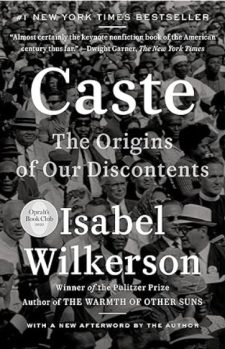
“Caste: The Origins of Our Discontents,” by Isabel Wilkerson
This is an incredible book that details societal hierarchies and their devastating effects on human well-being and the collective health of nations. Wilkerson details eight “pillars of caste,” factors that subjugate people, such as heritability, divine justification, and stigmatization, among others.
The book details the caste systems of India, nazi Germany, and the United States. While racial hierarchy is blatantly discriminatory, the book focuses on facets of the system that operate in a shadowy space between knowing and not knowing. Wilkerson does an incredible job of illustrating how these oppressive structures have wrought destruction for decades.
Her arguments transcend race and gender, instead focusing on inherent traits that translate to cultural norms. This book is dense, but well worth your time and consideration. While she explores the history of the system through the lens of enslavement and subsequent discriminatory laws in the United States, she demonstrates that the pillars can be used to subordinate and dehumanize people, regardless of skin color.



 More Reading
Leave a comment